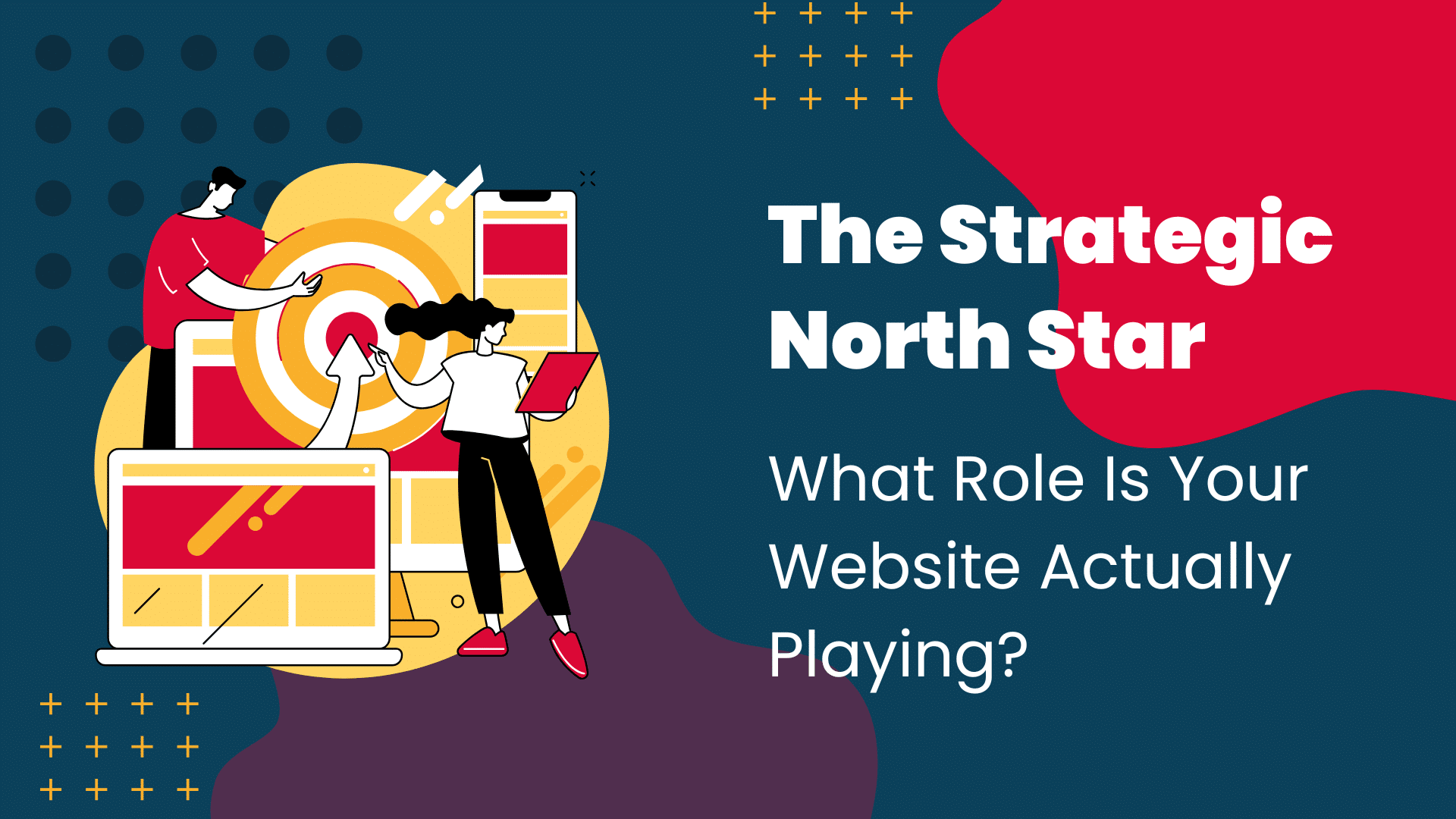
The Strategic North Star: What Role Is Your Website Actually Playing?
Most businesses treat their website like a Swiss Army knife. They want it to be a salesperson, a brand ambassador, a recruiter, a customer service agent, and a thought leader, all at once.
The problem? A Swiss Army knife is a collection of mediocre tools. The knife is too small to cut bread, the scissors are too weak to cut card, and the screwdriver is awkward to hold. When your website tries to fulfill every strategic role simultaneously, it becomes “strategically blunt.” It does everything, but it achieves nothing.
If your website isn’t moving the needle on your business goals, it’s rarely because of the design. It’s because the website hasn’t been given a specific job description.
When we ask clients what they want their website to do, they usually list outcomes: “I want more leads,” “I want to look professional,” or “I want to rank on Google.”
These aren’t strategies; they are desires.
A Strategic Role is the method by which those outcomes are achieved. It defines the day-to-day function of the site. Without a defined role, your team will make conflicting decisions. Marketing will want a “clean” brand look (Role: Credibility), while Sales will want “ugly” high-conversion pop-ups (Role: Lead Gen). Both are right, but they are playing different games.
To gain clarity, you must choose a primary archetype. While a site can have secondary functions, one must be the “Tie-Breaker” for every design and content decision.
1. The Sales Enabler (The Closer)
- Best for: High-ticket B2B, consulting, or complex services.
- The Job: To handle objections and qualify leads before they talk to a human.
- The Focus: Case studies, detailed processes, FAQs, and “Decision-Shaping” content.
- Success Metric: Lead quality and shortened sales cycles.
2. The Brand Flagship (The Authority)
- Best for: Luxury brands, established market leaders, or creative agencies.
- The Job: To command a premium price by radiating authority and high-end positioning.
- The Focus: Visual storytelling, unique UX interactions, and high-production value.
- Success Metric: Brand sentiment, press mentions, and “Price Elasticity” (the ability to charge more).
3. The Content Engine (The Educator)
- Best for: Software (SaaS), media companies, or businesses in rapidly changing industries.
- The Job: To build a massive audience and become the “Go-To” resource in the space.
- The Focus: Search Engine Optimization (SEO), deep-dive guides, and newsletter signups.
- Success Metric: Organic traffic growth and “Return Visitor” rates.
4. The Operational Hub (The Utility)
- Best for: Logistics, membership organizations, or high-volume service providers.
- The Job: To reduce the cost of doing business by automating customer support and logistics.
- The Focus: Portals, calculators, self-service knowledge bases, and intuitive navigation.
- Success Metric: Reduced support tickets and increased customer lifetime value.
How do you decide which role you need? You look at where your business is currently “stuck.”
- If your sales team spends all day answering the same 5 questions: Your website needs to be a Sales Enabler.
- If you are being outbid by “cheaper” competitors: Your website needs to be a Brand Flagship.
- If your market doesn’t know you exist: Your website needs to be a Content Engine.
- If your staff is overwhelmed by basic admin: Your website needs to be an Operational Hub.
The role should respond to your current business bottleneck.
The biggest killer of website budgets is Feature Creep, the urge to add “just one more thing” because a competitor has it.
When you have a defined role, you have a filtering mechanism. If you are a Brand Flagship, you don’t need a massive, cluttered blog hub. If you are a Sales Enabler, you don’t need a 3-minute cinematic intro video that hides your services.
Role clarity gives you permission to say “No” to features that don’t serve the primary goal. This keeps the site lean, fast, and effective.
Can a website have more than one role? Yes, but only in a Master-Servant relationship.
For example, a consulting firm might have Sales Enabler as its primary role and Content Engine as its secondary role. This means:
- The blog (Content Engine) is designed to bring people in.
- However, if the blog starts to distract users from the “Book a Call” process (Sales Enabler), the blog gets moved or simplified.
The primary role always wins the argument.
How We Define Your Role
We don’t start with wireframes; we start with a Strategic Audit.
1. Stakeholder Interviews: We uncover the conflicting “jobs” your team thinks the website is doing.
2. The Bottleneck Analysis: We identify where your growth is actually stalled.
3. Role Assignment: We define the “North Star” for the project.
This ensures that when we finally get to design, every pixel is serving a business objective, not just an aesthetic preference.
FAQs
Share This Story, Choose Your Platform!
The Strategic North Star: What Role Is Your Website Actually Playing?
Most businesses treat their website like a Swiss Army knife. They want it to be a salesperson, a brand ambassador, a recruiter, a customer service agent, and a thought leader, all at once.
The problem? A Swiss Army knife is a collection of mediocre tools. The knife is too small to cut bread, the scissors are too weak to cut card, and the screwdriver is awkward to hold. When your website tries to fulfill every strategic role simultaneously, it becomes “strategically blunt.” It does everything, but it achieves nothing.
If your website isn’t moving the needle on your business goals, it’s rarely because of the design. It’s because the website hasn’t been given a specific job description.
When we ask clients what they want their website to do, they usually list outcomes: “I want more leads,” “I want to look professional,” or “I want to rank on Google.”
These aren’t strategies; they are desires.
A Strategic Role is the method by which those outcomes are achieved. It defines the day-to-day function of the site. Without a defined role, your team will make conflicting decisions. Marketing will want a “clean” brand look (Role: Credibility), while Sales will want “ugly” high-conversion pop-ups (Role: Lead Gen). Both are right, but they are playing different games.
To gain clarity, you must choose a primary archetype. While a site can have secondary functions, one must be the “Tie-Breaker” for every design and content decision.
1. The Sales Enabler (The Closer)
- Best for: High-ticket B2B, consulting, or complex services.
- The Job: To handle objections and qualify leads before they talk to a human.
- The Focus: Case studies, detailed processes, FAQs, and “Decision-Shaping” content.
- Success Metric: Lead quality and shortened sales cycles.
2. The Brand Flagship (The Authority)
- Best for: Luxury brands, established market leaders, or creative agencies.
- The Job: To command a premium price by radiating authority and high-end positioning.
- The Focus: Visual storytelling, unique UX interactions, and high-production value.
- Success Metric: Brand sentiment, press mentions, and “Price Elasticity” (the ability to charge more).
3. The Content Engine (The Educator)
- Best for: Software (SaaS), media companies, or businesses in rapidly changing industries.
- The Job: To build a massive audience and become the “Go-To” resource in the space.
- The Focus: Search Engine Optimization (SEO), deep-dive guides, and newsletter signups.
- Success Metric: Organic traffic growth and “Return Visitor” rates.
4. The Operational Hub (The Utility)
- Best for: Logistics, membership organizations, or high-volume service providers.
- The Job: To reduce the cost of doing business by automating customer support and logistics.
- The Focus: Portals, calculators, self-service knowledge bases, and intuitive navigation.
- Success Metric: Reduced support tickets and increased customer lifetime value.
How do you decide which role you need? You look at where your business is currently “stuck.”
- If your sales team spends all day answering the same 5 questions: Your website needs to be a Sales Enabler.
- If you are being outbid by “cheaper” competitors: Your website needs to be a Brand Flagship.
- If your market doesn’t know you exist: Your website needs to be a Content Engine.
- If your staff is overwhelmed by basic admin: Your website needs to be an Operational Hub.
The role should respond to your current business bottleneck.
The biggest killer of website budgets is Feature Creep, the urge to add “just one more thing” because a competitor has it.
When you have a defined role, you have a filtering mechanism. If you are a Brand Flagship, you don’t need a massive, cluttered blog hub. If you are a Sales Enabler, you don’t need a 3-minute cinematic intro video that hides your services.
Role clarity gives you permission to say “No” to features that don’t serve the primary goal. This keeps the site lean, fast, and effective.
Can a website have more than one role? Yes, but only in a Master-Servant relationship.
For example, a consulting firm might have Sales Enabler as its primary role and Content Engine as its secondary role. This means:
- The blog (Content Engine) is designed to bring people in.
- However, if the blog starts to distract users from the “Book a Call” process (Sales Enabler), the blog gets moved or simplified.
The primary role always wins the argument.
How We Define Your Role
We don’t start with wireframes; we start with a Strategic Audit.
1. Stakeholder Interviews: We uncover the conflicting “jobs” your team thinks the website is doing.
2. The Bottleneck Analysis: We identify where your growth is actually stalled.
3. Role Assignment: We define the “North Star” for the project.
This ensures that when we finally get to design, every pixel is serving a business objective, not just an aesthetic preference.