What a Website Really Costs in Ireland
A website project usually begins with a simple question: “How much will it cost?”
A business asks for quotes. Agencies provide numbers. Someone compares proposals. A decision gets made.
On paper, the process appears rational.
The problem is that the quoted figure is often the least important number in the entire investment.
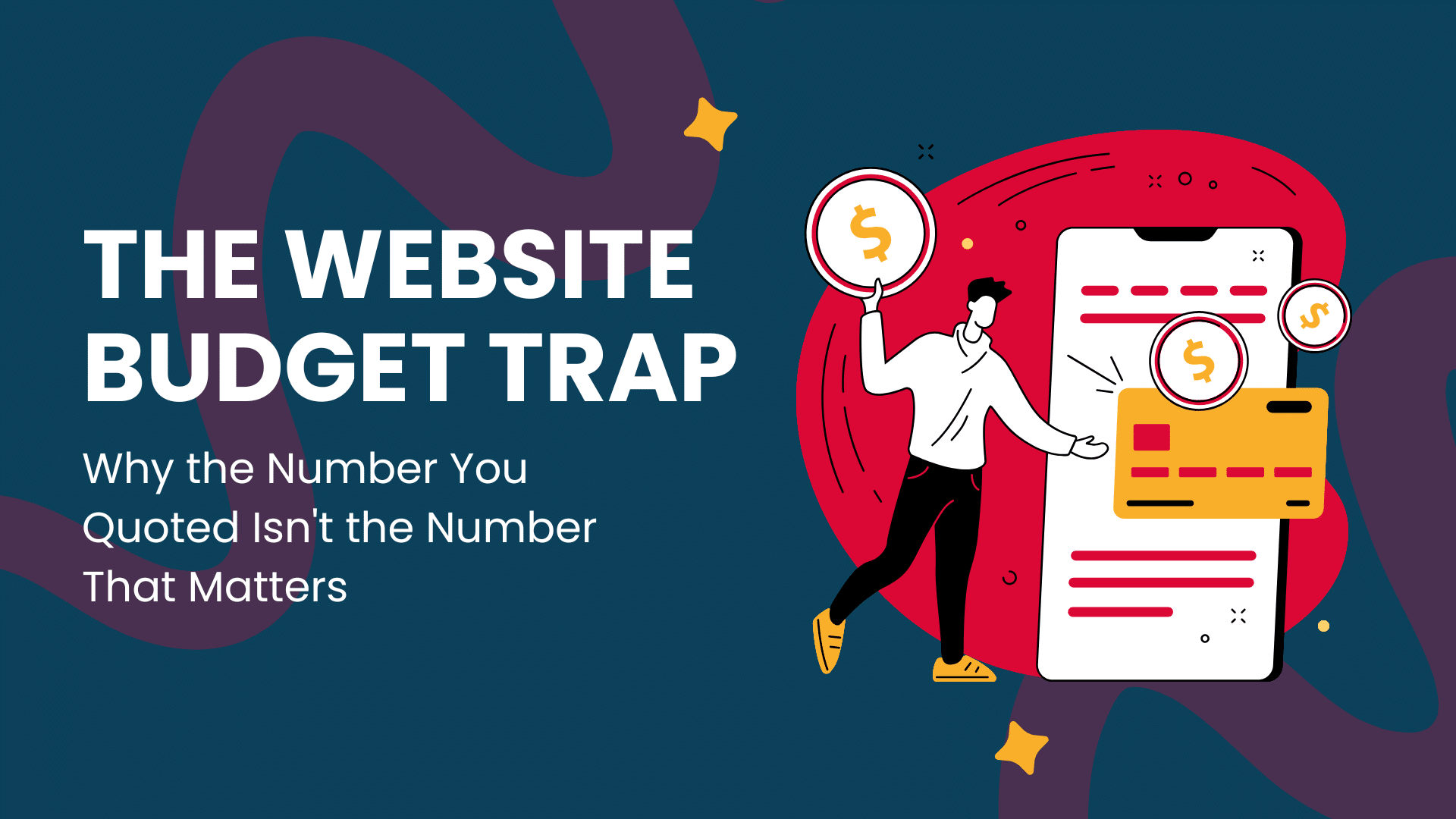
A €6,000 website can quietly cost a business €40,000 over three years. Not because the original build was expensive, but because every future change becomes slower, harder, and more dependent on somebody else, a pattern we often see with cheap websites that create expensive long-term operational costs. New landing pages take weeks. Content updates require developers. Integrations break. Marketing campaigns stall while technical fixes queue up.
Most website budgets focus on acquisition cost. Few businesses examine ownership cost. This is particularly common in website design for small business projects, where long-term operational costs are often overlooked during procurement.
The companies getting the strongest returns from their websites are not necessarily spending the most. They are building systems that reduce friction, accelerate decision-making, and support growth without constant redevelopment.
5 Key Takeaways
When businesses compare website proposals, they naturally focus on visible costs.
Design. Development. Content migration. Business website hosting. Training.
These are tangible items that fit neatly into a spreadsheet.
What rarely appears is the operational impact of the decisions being made during the build.
A website that requires developer involvement for every small change may look affordable at launch. This often happens when the content management system becomes a bottleneck for internal teams rather than a productivity tool. Six months later, marketing teams discover they cannot move quickly. Campaign pages become projects. Product updates require tickets. Small changes accumulate into delays that affect revenue generation.
The issue is not the initial invoice. The issue is the cost of every future decision. This is where many website investments underperform. Leadership teams approve projects based on build costs while unknowingly accepting years of operational constraints.
The website becomes a bottleneck rather than an asset.
Most long-term website costs emerge after launch. A new service launches and requires additional landing pages. Sales teams need lead qualification improvements. Marketing wants campaign-specific content. Operations require integrations with internal systems.
None of these requests are unusual. They represent normal business growth.
Problems begin when the website lacks flexibility.
What initially looked like a modest website investment becomes a continuous stream of development costs. More importantly, progress slows. Teams spend time coordinating work rather than executing it.
This hidden cost is rarely measured directly.
Instead, it appears indirectly through delayed campaigns, missed opportunities, slower sales cycles, and reduced organisational responsiveness.
The financial impact compounds quietly because businesses rarely connect these operational delays back to website architecture decisions made years earlier.
A more useful way to evaluate website investments is through Total Cost of Ownership (TCO).
Rather than asking, “What does the website cost?”, ask:
“What will this website cost us to operate, adapt, and improve over the next three years?”
The answer usually includes four categories.
Initial build investment remains important, but it is only one component.
Ongoing maintenance covers updates, security, hosting, monitoring, and technical management. Businesses using managed wordpress hosting often reduce internal technical overhead while improving operational resilience.
Change costs include new pages, content updates, functionality improvements, integrations, and optimisation work.
Opportunity costs represent revenue delayed or lost because the website slows execution.
The final category often exceeds all others.
A business that cannot launch campaigns quickly, test messaging efficiently, or adapt to market changes pays a significant commercial penalty regardless of how little the original website cost.
Before signing a proposal, leadership teams should evaluate the project through four questions.
First: How easily can non-technical staff manage the website?
If routine changes require developer involvement, future costs will rise rapidly.
Second: How adaptable is the platform?
Growth inevitably creates new requirements. The website should accommodate them without major redevelopment.
Third: What dependencies exist?
Every dependency introduces friction. Understand who controls content, hosting, integrations, analytics, and technical infrastructure.
Fourth: What happens when the business doubles in size?
A website should support growth rather than trigger another rebuild, which is often why many website redesign projects fail to solve the underlying business problem.
These questions reveal far more about long-term value than design mock-ups or feature lists.
Consider the following indicators:
- Marketing updates regularly require technical assistance.
- New landing pages take more than a few days to publish.
- Internal teams avoid website improvements because changes feel complicated.
- Integrations between systems frequently require manual workarounds.
- Website performance issues remain unresolved for extended periods.
- Every growth initiative creates unexpected development costs.
If several of these statements feel familiar, the website may already be generating operational drag.
The cost exists whether it appears in a budget report or not.
Many organisations respond to growth challenges by producing more content.
More blogs. More pages. More campaigns.
The quantity increases while results remain largely unchanged. Google’s growing emphasis on Information Gain rewards original insight over repetitive publishing. The objective is no longer volume. It is contribution.
One well-researched article that answers genuine buyer objections can outperform dozens of generic posts covering identical topics.
The same principle applies to topic clusters.
A deep, authoritative piece supported by strategically related content creates stronger signals than twenty disconnected articles competing for attention.
Viewed correctly, content becomes a pre-sales asset. It educates prospects before meetings occur. It addresses concerns before proposals are requested. It filters serious buyers from casual researchers. That reduces sales friction and improves lead quality.
The goal is not attracting everyone. The goal is attracting the right people.
The Strategic Question Most Businesses Never Ask
Most website procurement conversations revolve around price. The more useful discussion concerns freedom.
How quickly can your organisation launch something new?
How easily can teams adapt to changing priorities?
How much effort is required to turn a business decision into customer-facing reality?
Those questions determine long-term value.
A website is not simply a marketing asset. It is an operational system that either accelerates decisions or slows them down. Effective wordpress website management ensures that growth initiatives can be executed without creating technical bottlenecks.
Frequently Asked Questions
Share This Story, Choose Your Platform!
What a Website Really Costs in Ireland
A website project usually begins with a simple question: “How much will it cost?”
A business asks for quotes. Agencies provide numbers. Someone compares proposals. A decision gets made.
On paper, the process appears rational.
The problem is that the quoted figure is often the least important number in the entire investment.
A €6,000 website can quietly cost a business €40,000 over three years. Not because the original build was expensive, but because every future change becomes slower, harder, and more dependent on somebody else, a pattern we often see with cheap websites that create expensive long-term operational costs. New landing pages take weeks. Content updates require developers. Integrations break. Marketing campaigns stall while technical fixes queue up.
Most website budgets focus on acquisition cost. Few businesses examine ownership cost. This is particularly common in website design for small business projects, where long-term operational costs are often overlooked during procurement.
The companies getting the strongest returns from their websites are not necessarily spending the most. They are building systems that reduce friction, accelerate decision-making, and support growth without constant redevelopment.
5 Key Takeaways
When businesses compare website proposals, they naturally focus on visible costs.
Design. Development. Content migration. Business website hosting. Training.
These are tangible items that fit neatly into a spreadsheet.
What rarely appears is the operational impact of the decisions being made during the build.
A website that requires developer involvement for every small change may look affordable at launch. This often happens when the content management system becomes a bottleneck for internal teams rather than a productivity tool. Six months later, marketing teams discover they cannot move quickly. Campaign pages become projects. Product updates require tickets. Small changes accumulate into delays that affect revenue generation.
The issue is not the initial invoice. The issue is the cost of every future decision. This is where many website investments underperform. Leadership teams approve projects based on build costs while unknowingly accepting years of operational constraints.
The website becomes a bottleneck rather than an asset.
Most long-term website costs emerge after launch. A new service launches and requires additional landing pages. Sales teams need lead qualification improvements. Marketing wants campaign-specific content. Operations require integrations with internal systems.
None of these requests are unusual. They represent normal business growth.
Problems begin when the website lacks flexibility.
What initially looked like a modest website investment becomes a continuous stream of development costs. More importantly, progress slows. Teams spend time coordinating work rather than executing it.
This hidden cost is rarely measured directly.
Instead, it appears indirectly through delayed campaigns, missed opportunities, slower sales cycles, and reduced organisational responsiveness.
The financial impact compounds quietly because businesses rarely connect these operational delays back to website architecture decisions made years earlier.
A more useful way to evaluate website investments is through Total Cost of Ownership (TCO).
Rather than asking, “What does the website cost?”, ask:
“What will this website cost us to operate, adapt, and improve over the next three years?”
The answer usually includes four categories.
Initial build investment remains important, but it is only one component.
Ongoing maintenance covers updates, security, hosting, monitoring, and technical management. Businesses using managed wordpress hosting often reduce internal technical overhead while improving operational resilience.
Change costs include new pages, content updates, functionality improvements, integrations, and optimisation work.
Opportunity costs represent revenue delayed or lost because the website slows execution.
The final category often exceeds all others.
A business that cannot launch campaigns quickly, test messaging efficiently, or adapt to market changes pays a significant commercial penalty regardless of how little the original website cost.
Before signing a proposal, leadership teams should evaluate the project through four questions.
First: How easily can non-technical staff manage the website?
If routine changes require developer involvement, future costs will rise rapidly.
Second: How adaptable is the platform?
Growth inevitably creates new requirements. The website should accommodate them without major redevelopment.
Third: What dependencies exist?
Every dependency introduces friction. Understand who controls content, hosting, integrations, analytics, and technical infrastructure.
Fourth: What happens when the business doubles in size?
A website should support growth rather than trigger another rebuild, which is often why many website redesign projects fail to solve the underlying business problem.
These questions reveal far more about long-term value than design mock-ups or feature lists.
Consider the following indicators:
- Marketing updates regularly require technical assistance.
- New landing pages take more than a few days to publish.
- Internal teams avoid website improvements because changes feel complicated.
- Integrations between systems frequently require manual workarounds.
- Website performance issues remain unresolved for extended periods.
- Every growth initiative creates unexpected development costs.
If several of these statements feel familiar, the website may already be generating operational drag.
The cost exists whether it appears in a budget report or not.
Many organisations respond to growth challenges by producing more content.
More blogs. More pages. More campaigns.
The quantity increases while results remain largely unchanged. Google’s growing emphasis on Information Gain rewards original insight over repetitive publishing. The objective is no longer volume. It is contribution.
One well-researched article that answers genuine buyer objections can outperform dozens of generic posts covering identical topics.
The same principle applies to topic clusters.
A deep, authoritative piece supported by strategically related content creates stronger signals than twenty disconnected articles competing for attention.
Viewed correctly, content becomes a pre-sales asset. It educates prospects before meetings occur. It addresses concerns before proposals are requested. It filters serious buyers from casual researchers. That reduces sales friction and improves lead quality.
The goal is not attracting everyone. The goal is attracting the right people.
The Strategic Question Most Businesses Never Ask
Most website procurement conversations revolve around price. The more useful discussion concerns freedom.
How quickly can your organisation launch something new?
How easily can teams adapt to changing priorities?
How much effort is required to turn a business decision into customer-facing reality?
Those questions determine long-term value.
A website is not simply a marketing asset. It is an operational system that either accelerates decisions or slows them down. Effective wordpress website management ensures that growth initiatives can be executed without creating technical bottlenecks.